
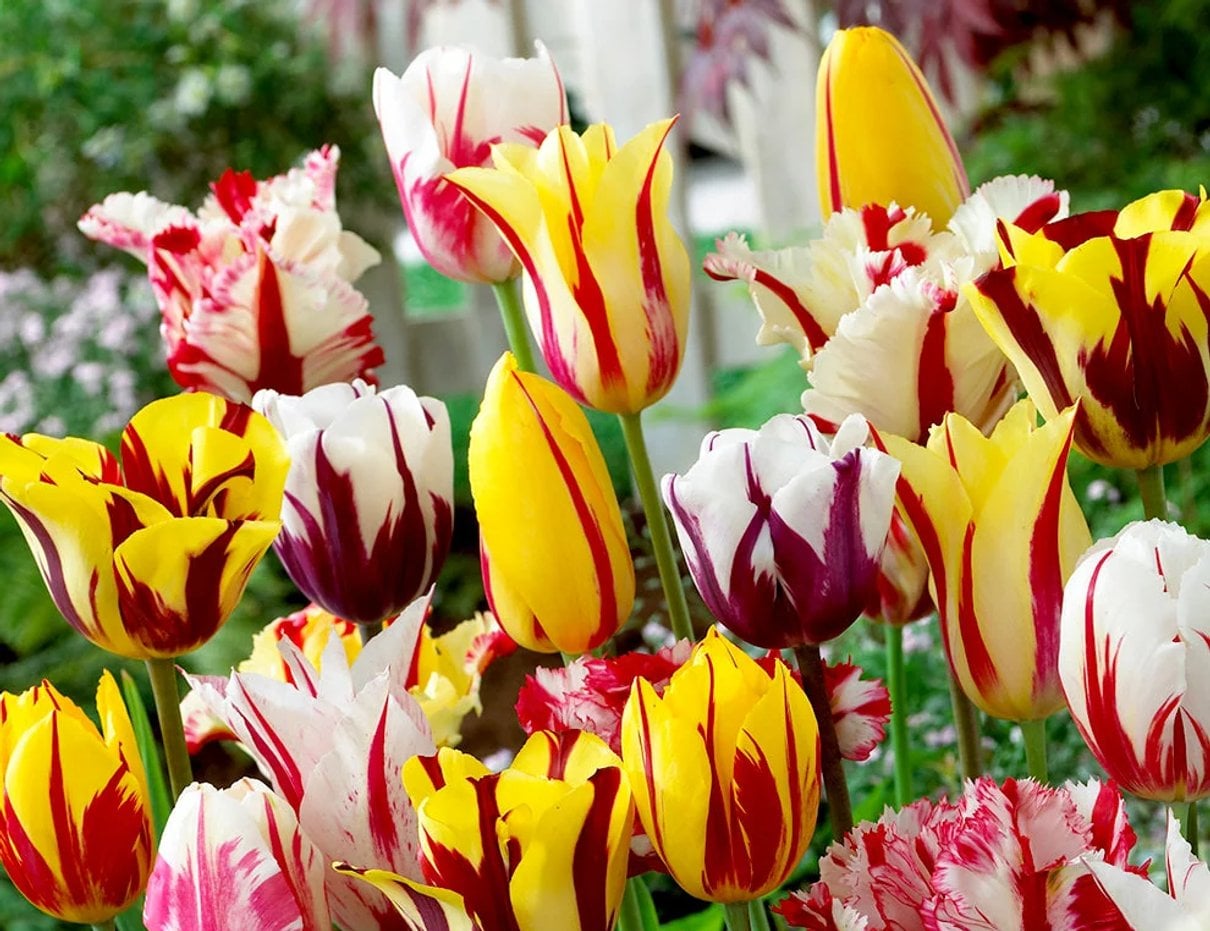
A close look at the Rembrandt Mix’s striped colour, planting role and UK ordering details can help you decide whether it belongs in your spring garden.
Some tulips make their mark through one clean colour; this mix is aimed at gardeners who want contrast. Tulip Rembrandt Mix brings together blooms with bold colour and brushstroke-like markings, a painterly effect that can offer gardeners a varied spring bed without requiring them to coordinate several named varieties. That is our reading of the product concept, rather than a claim made by the seller.
We reviewed the UK product listing and its ordering details, rather than testing or growing the bulbs. The useful question is whether the mix’s scale, planting window and visual character line up with your space and the kind of display you want.
Disclosure: this post includes affiliate links, and we may be paid a commission on purchases made through them.
→ Check the current Tulip Rembrandt Mix price
The short version
- Tulip Rembrandt Mix is the star for contrasting, brush-marked colour, rather than a uniform single-colour planting.
- The UK listing specifies top-size 12/+ cm bulbs and plants up to 55 cm tall.
- DutchGrown lists autumn delivery and recommends planting in October or November.
- Its mass-planting recommendation suits a border or repeated drift better than a handful of isolated stems.
- The page does not give an exact flowering date or planting depth, so check the current listing and general planting guidance before ordering.
Colour with character
The appeal is the flower heads, which combine bright base colours with contrasting brushstrokes. The result is variation within a shared tulip style, for gardeners who like a composed spring bed but do not want one solid colour.
The brand connects the name of Tulip Rembrandt Mix to the patterned tulips associated with seventeenth-century Tulipmania. The useful modern detail is the markings, not the history. The listing recommends mass planting, so think in clusters or a generous sweep where the pattern can read clearly. A few bulbs dotted through a busy border may lose that effect.
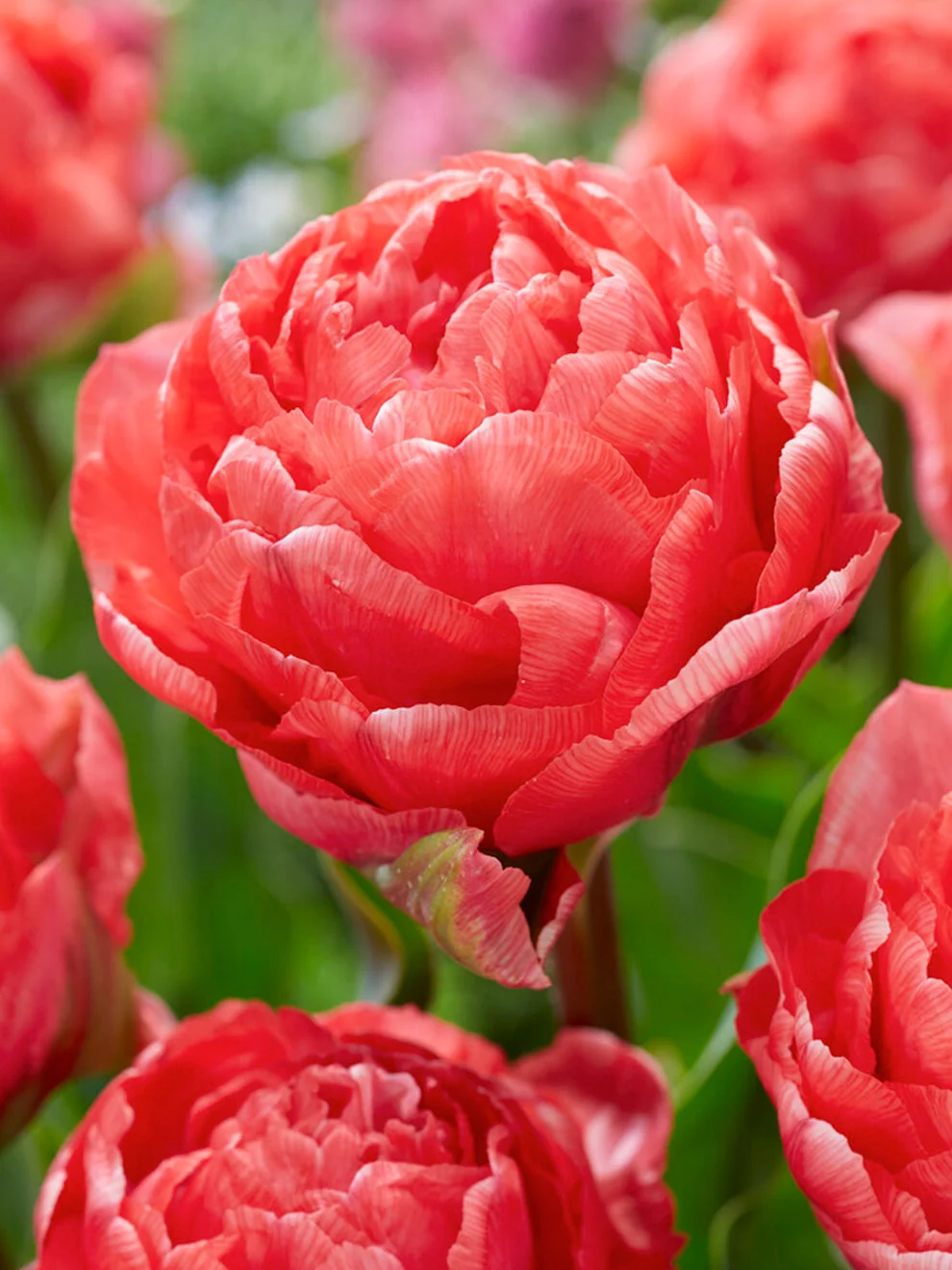
For a useful contrast, Tulip Taiwan is described as a salmon-pink, peony-shaped double tulip. Its listing gives a more compact height and names pots, containers and cut flowers as uses. That makes it a better comparison if your priority is a rounded flower or a container focal point, while Tulip Rembrandt Mix is the more natural fit for broad colour impact.
Reading the listing
The Tulip Rembrandt Mix is listed at up to 55 cm, a useful planning clue for placing the mix where it can be seen among lower spring plants. It is not a compact edging tulip. Check the mature size of neighbouring plants and put the bulbs where the flower stems will not disappear behind later foliage or a tall front border plant.
- Bulb size: the listing says top size 12/+ cm.
- Height: up to 55 cm according to the product page.
- Season: autumn delivery, with planting suggested for October or November.
- Display: mass planting is the seller’s stated use.
The page gives useful bulb sizing and height, but not a precise flowering week, planting depth, soil type or quantity per option. Check those details on the live listing, especially if you are planning around a fixed date or a particular bed depth.
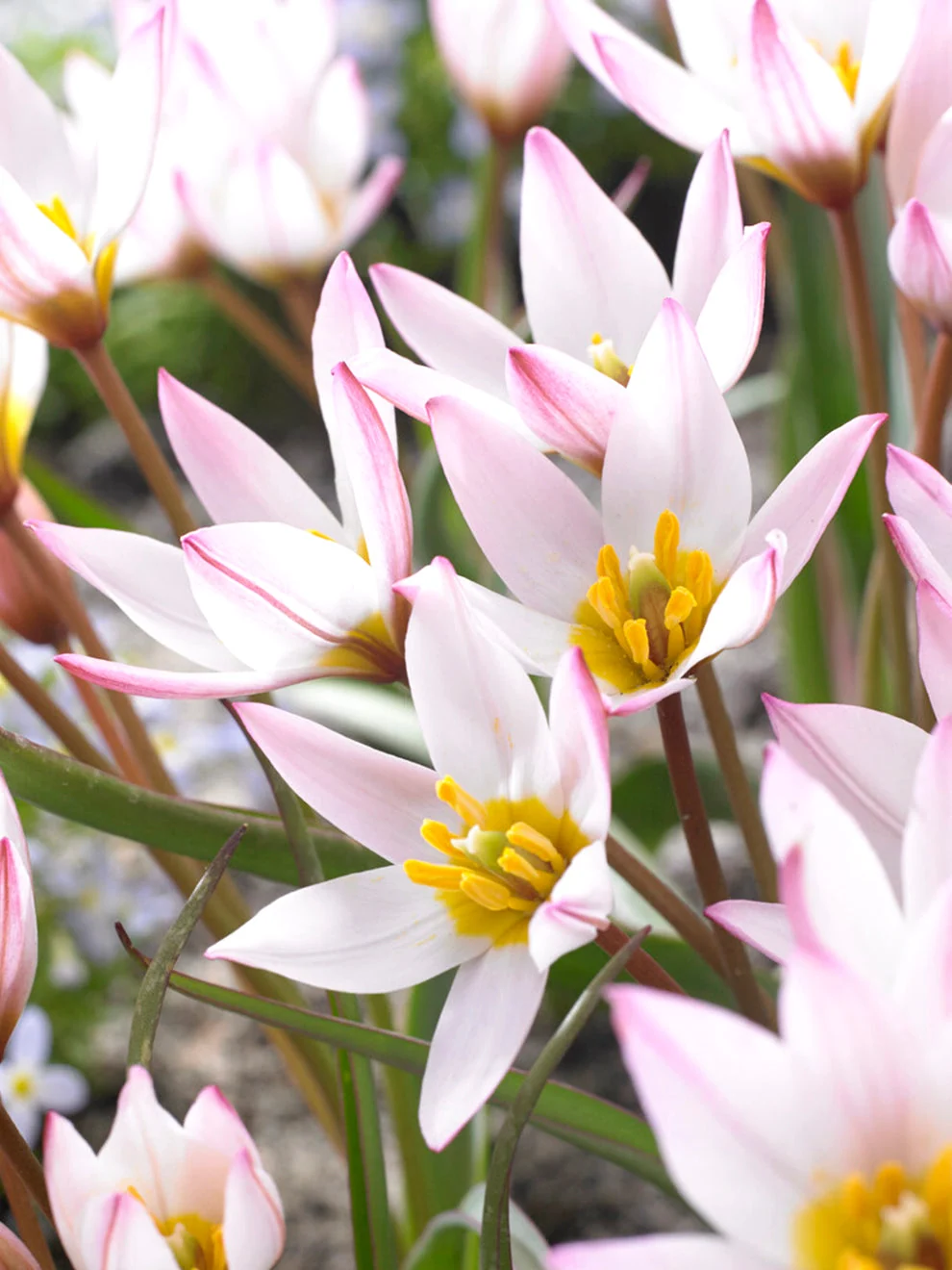
The comparison with Tulip Hilde helps put the Rembrandt Mix’s scale into context. Hilde is listed at 20 cm, with star-shaped blooms and use in rock gardens, paths and flower beds. Its page also describes it as a naturalising variety. Choose that kind of compact species tulip for the front edge or a smaller garden; choose the taller Rembrandt Mix when you have room for a more visible, massed display.
Where it works
Because the seller points to mass planting, the most convincing use is a repeated group in a border, a large container scheme or a bed viewed from a path. Repetition lets the colour variation feel intentional. In a mixed border, echo one or two colours elsewhere in the planting rather than adding several competing patterned flowers beside it.
Consider the site in practical terms: how visible is the area in spring, how much space can the planting occupy, and will nearby plants be low enough to frame stems stated at up to 55 cm? These are design questions rather than extra promises from the product page. The mix works best as a planned patch, where the streaked flowers can appear as a single visual gesture.
If you prefer a more sharply defined colour story, Tulip Daniella is another patterned option in the store, described with mauve-pink flowers and red markings. Tulip Slawa offers a different direction through dark purple blooms. Those single-variety examples help show why a mix is useful: it supplies variation without requiring you to pick and balance each variety separately.
→ Review the current planting details for Tulip Rembrandt Mix
Ordering Tulip Rembrandt Mix is seasonal. DutchGrown lists autumn delivery and says dispatch starts in early October. Check stock and timing before relying on a particular planting date. The store says it dispatches from London and provides UK pages for shipping schedules, costs and its grow guarantee.
→ Check current UK availability for Tulip Rembrandt Mix
Autumn ordering
On the UK store, start at the Tulip Rembrandt Mix page and confirm that the selected size and delivery timing meet your plan. Autumn planting is the stated window, with October and November named by the seller. Before checkout, look at the shipping schedule for the current dispatch information, then read the terms of the grow guarantee so you understand its scope and any conditions.
For a new bulb buyer, the buying process is relatively legible: the product detail gives a height, bulb-size label, broad planting period and a suggested display role. The remaining decisions are garden-specific. Check quantities against the area you want to fill, verify the current product options and delivery dates, and use the store’s planting guidance for spacing and depth rather than guessing from the product name.
- Measure the patch and decide whether you want a group or a repeated drift.
- Check bulb-size and pack options on the live listing.
- Confirm dispatch timing and UK shipping details before you place an order.
- Review the grow guarantee and the planting advice for your site.
Limits to weigh
The main limitation is the listing leaves out a flowering date, soil conditions and planting depth. Its recommendation for mass planting also implies a display that needs room, so it may not suit a tiny pot or a gardener who wants only a few matching blooms.
There is also a familiar trade-off in any mixed product: the exact balance of colours and markings matters to the finished look, and the listing does not specify the precise appearance of every flower in the mix. If colour uniformity is essential, a named single variety such as Tulip Taiwan may be a more predictable visual choice. If you enjoy controlled variation and have room to plant in quantity, Rembrandt Mix has a clearer case.
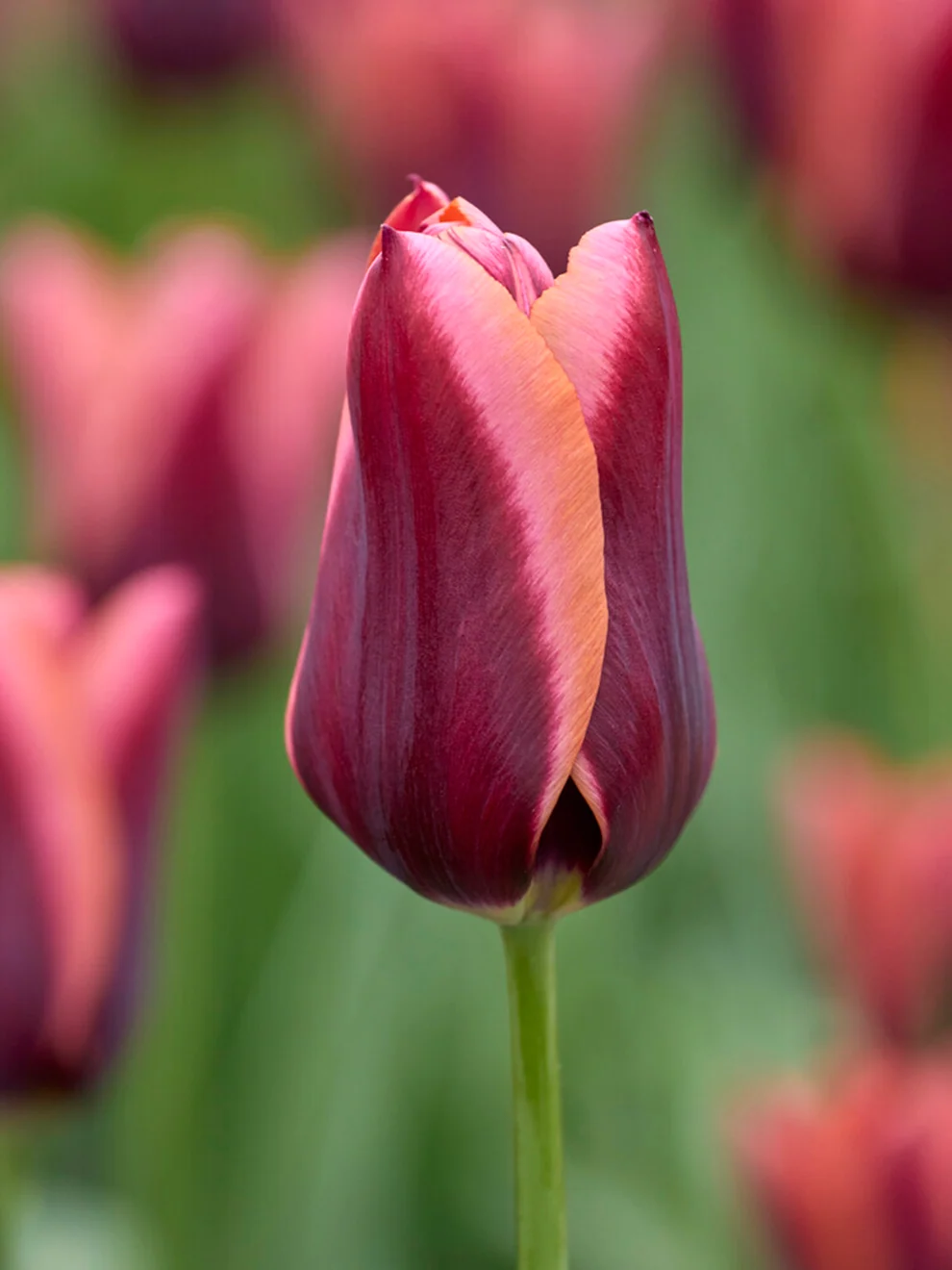
Gardeners comparing the two approaches can use Tulip Slawa as a single-colour point of reference. Its dark purple flowers create a more controlled palette; Tulip Rembrandt Mix is better suited to a less uniform, painterly effect. Neither approach is universally better. The right choice depends on whether you want the whole bed to repeat one tone or to include more variation within the tulip planting.
Questions from buyers
When should the bulbs be planted?
The UK product page says to plant in October or November and lists the bulbs for autumn delivery. Confirm dispatch timing on the live UK store before ordering, since the current schedule can vary by season.
How tall do the tulips grow?
DutchGrown lists a height of up to 55 cm for Tulip Rembrandt Mix. Use that as a placement guide and check the store’s planting information for spacing and depth, which are not specified in the product description we reviewed.
Is the mix suitable for a small container?
The seller specifically recommends mass planting, so the mix’s stated role suggests a larger group. For a smaller container or a more compact display, compare the listing with varieties such as Tulip Taiwan, which the brand names for pots and containers.
Our take
We see Tulip Rembrandt Mix as a considered pick for a roomy spring display: brush-marked colour, stated height and mass-planting role give it a clear identity. We recommend it to gardeners who want an expressive tulip patch and are comfortable planning around autumn delivery.
We would pause if the planting area is very small, if uniform colour is the priority, or if a precise bloom date is essential. Check the current bulb options, delivery schedule and growing guidance on the UK product page, then decide whether the mix fits your site.