
A room-by-room planning sequence for balancing active play, table projects and easy clean-up with Boori furniture that fits your family’s space.
A playroom has to do several jobs at once: give children room to move, make it easy to settle into quieter play, and make tidying possible without an adult rebuilding the room each evening. Choosing pieces before mapping those activities can leave awkward corners and crowded routes.
We reviewed the product information on Boori’s UK store to shape this practical plan. Its range includes children’s activity furniture, desks and accessible storage, so the useful question is which role your room needs a piece to fill.
→ View Boori playroom furniture
Disclosure: this post includes affiliate links, and we may be paid a commission on purchases made through them.
The short version
- Begin with clear routes and the room’s fixed features before choosing furniture.
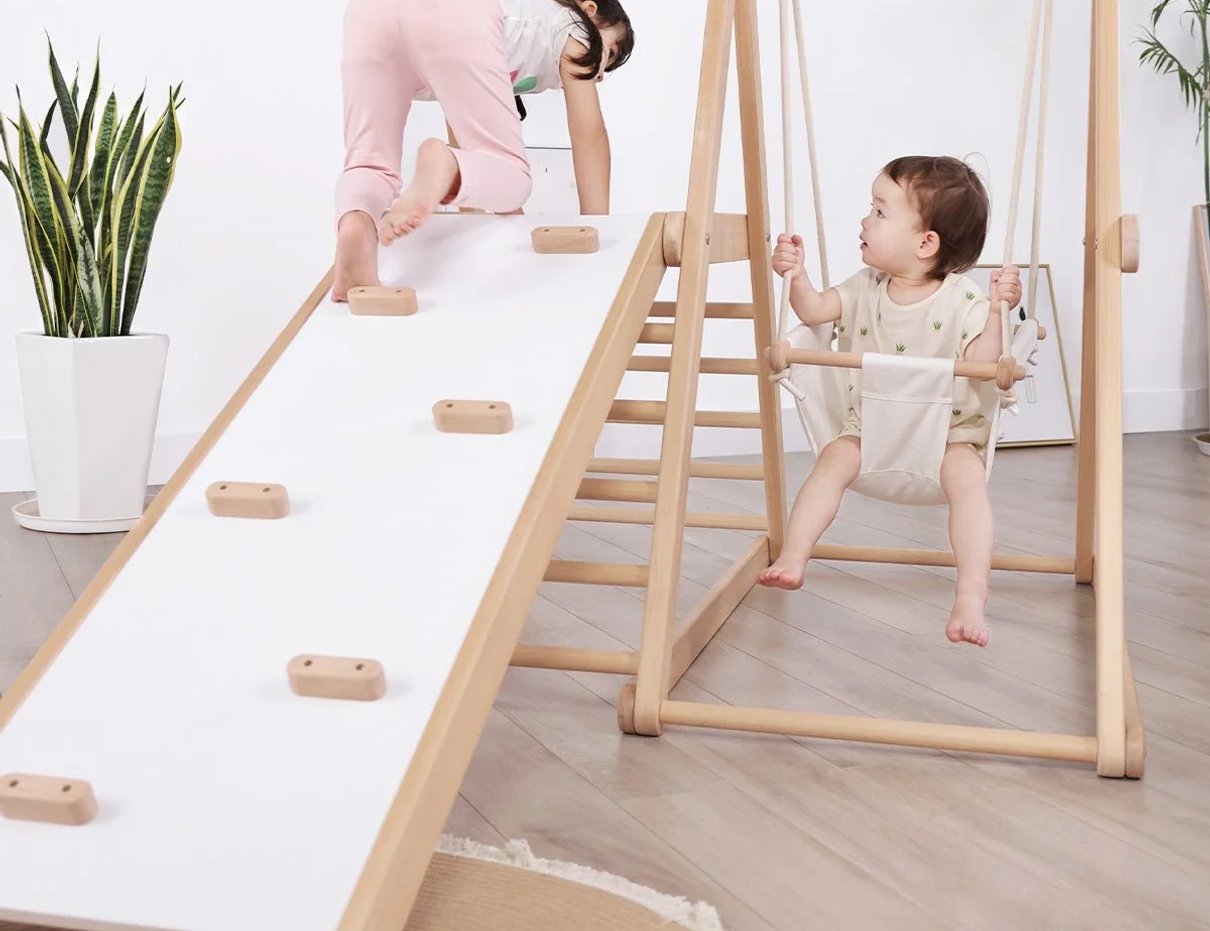
- The Tidy Climbing Gym suits a movement zone; its ramp flips between a climbing slope and a slide.
- The Tidy Table with two Chair Bundle provides a shared surface for drawing, puzzles and making.
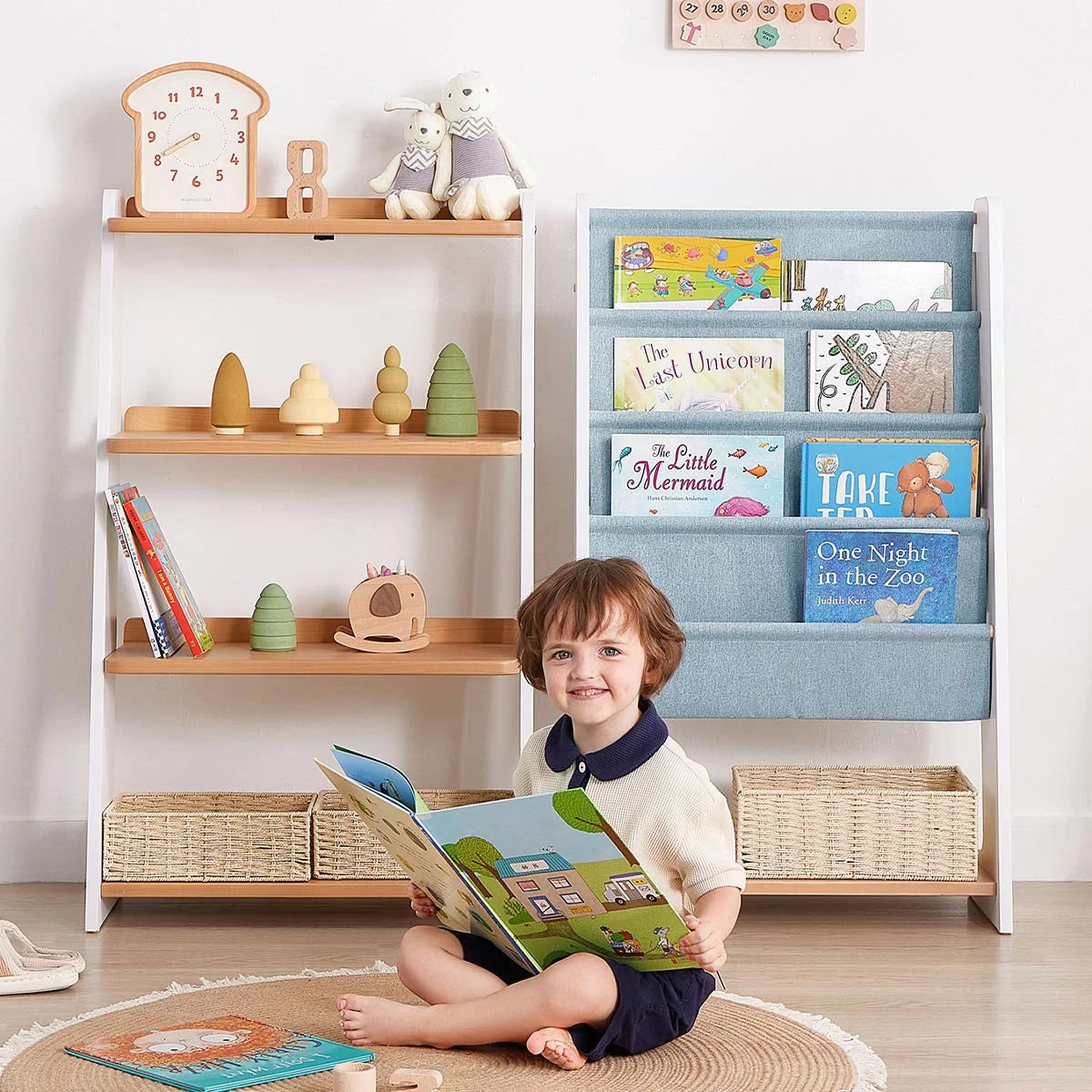
- The Oslo Bookrack uses four fabric pouches to keep books visible and reachable.
- Check each product’s dimensions, age guidance, assembly information and current availability on Boori’s UK store.
Map the movement
Start by measuring the usable floor area, then mark doors, radiators, windows and the route between the entrance and the room’s main play spot. Leave a generous open patch for movement instead of filling every wall. If the room is shared, plan a clear path through it before placing bulky furniture.
For families who want an indoor activity feature, the Tidy Climbing Gym is a defined option to assess. Boori describes a ramp that can be flipped between a climbing slope and a slide. That gives the piece more than one play mode, while still making its footprint and suitable placement important checks. Review the product dimensions and safety guidance against your room and the child’s age before deciding.
Think about how the activity fits around the rest of the day, too. A climbing feature may be useful when children need a movement option indoors, but it should not dominate the room’s only route or sit where quieter activities are constantly interrupted. A simple floor plan drawn on paper can help: mark the active zone, the furniture footprint and the space needed to pass safely. If the remaining play area becomes too narrow, scale back the plan before ordering.
- Keep the landing area and route around the activity piece unobstructed.
- Check the manufacturer’s age and use guidance rather than assuming a product suits every child.
- Choose a position where an adult can supervise without blocking the rest of the room.
Set up making
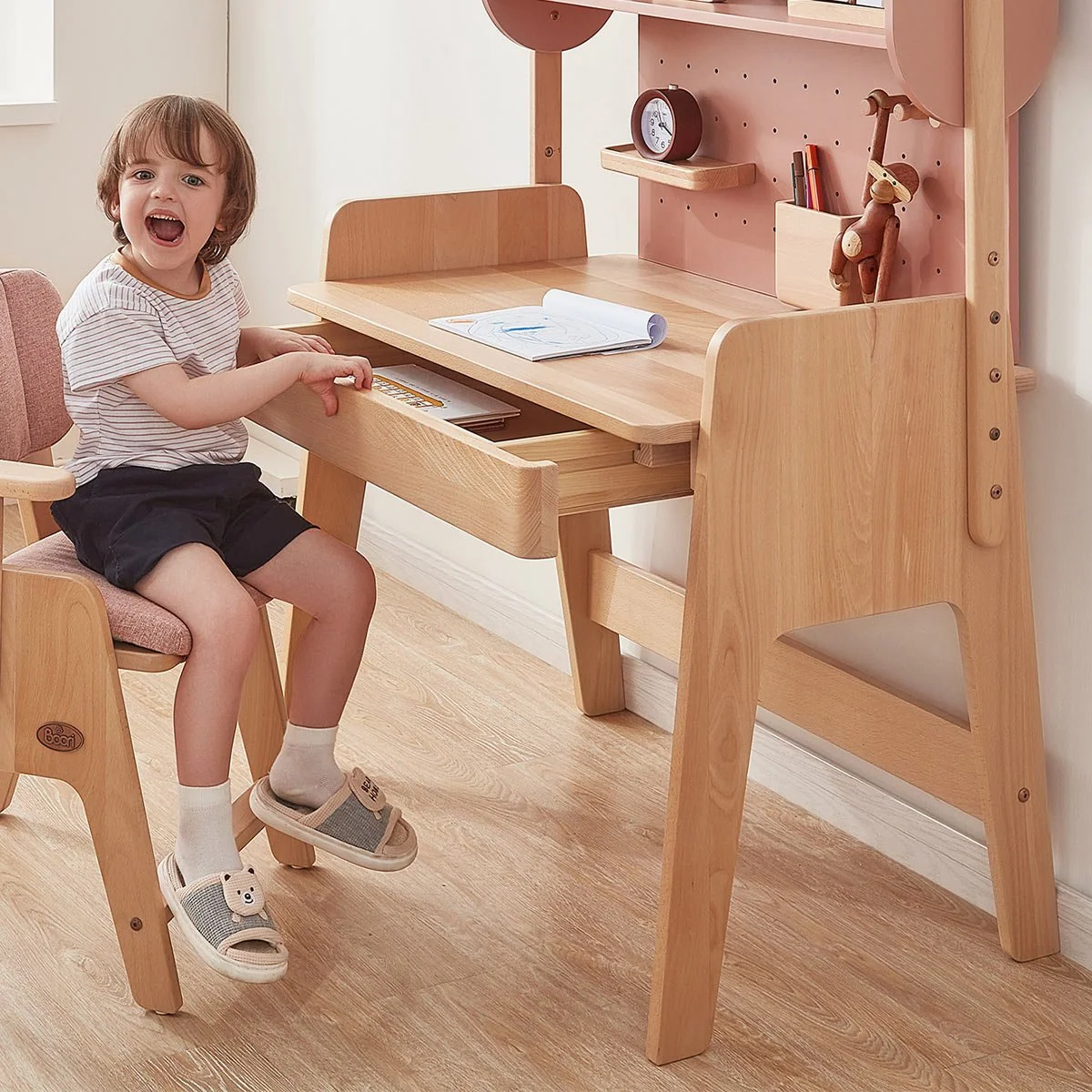
A table or desk works best when it has a job. Decide whether the room needs a shared craft surface, a place for early drawing, or a more focused study spot. The Euler Desk is made from European Beech wood and Australian Pine timber, and the listing describes three adjustable heights and a stationery drawer. These details make it worth considering for a growing work corner, provided the listed dimensions suit the space.
For younger children or group projects, the Tidy Table with two Chair Bundle combines one table and two chairs. Boori notes angled timber feet and integrated storage. A bundle can simplify a coordinated setup, but check the table and chair dimensions and whether the storage is useful for the materials your child actually uses.
- Place washable, frequently used materials within reach, with adult-only supplies stored separately.
- Leave enough room to pull chairs out and walk around the work surface.
- Use a lidded container or the furniture’s own storage to make the reset routine simple.
→ Check the Tidy Table bundle details
Make calm corners
A quieter area can be simple: a comfortable place to sit, a small selection of books and enough separation from the busiest play. Put favourite titles at a child’s eye level so choosing one does not require an adult to retrieve it. The Oslo Bookrack has four fabric pouches for books within reach. Consider it when display and access matter more than storing a large collection behind closed doors.
If books, toys and craft supplies all compete for the same surface, assign each category a home. Boori’s Tidy Integrated Storage Unit listing describes four child-friendly tubs. Removable tubs may help separate items for sorting, though the available footprint and the location of small parts should guide placement in a family home.
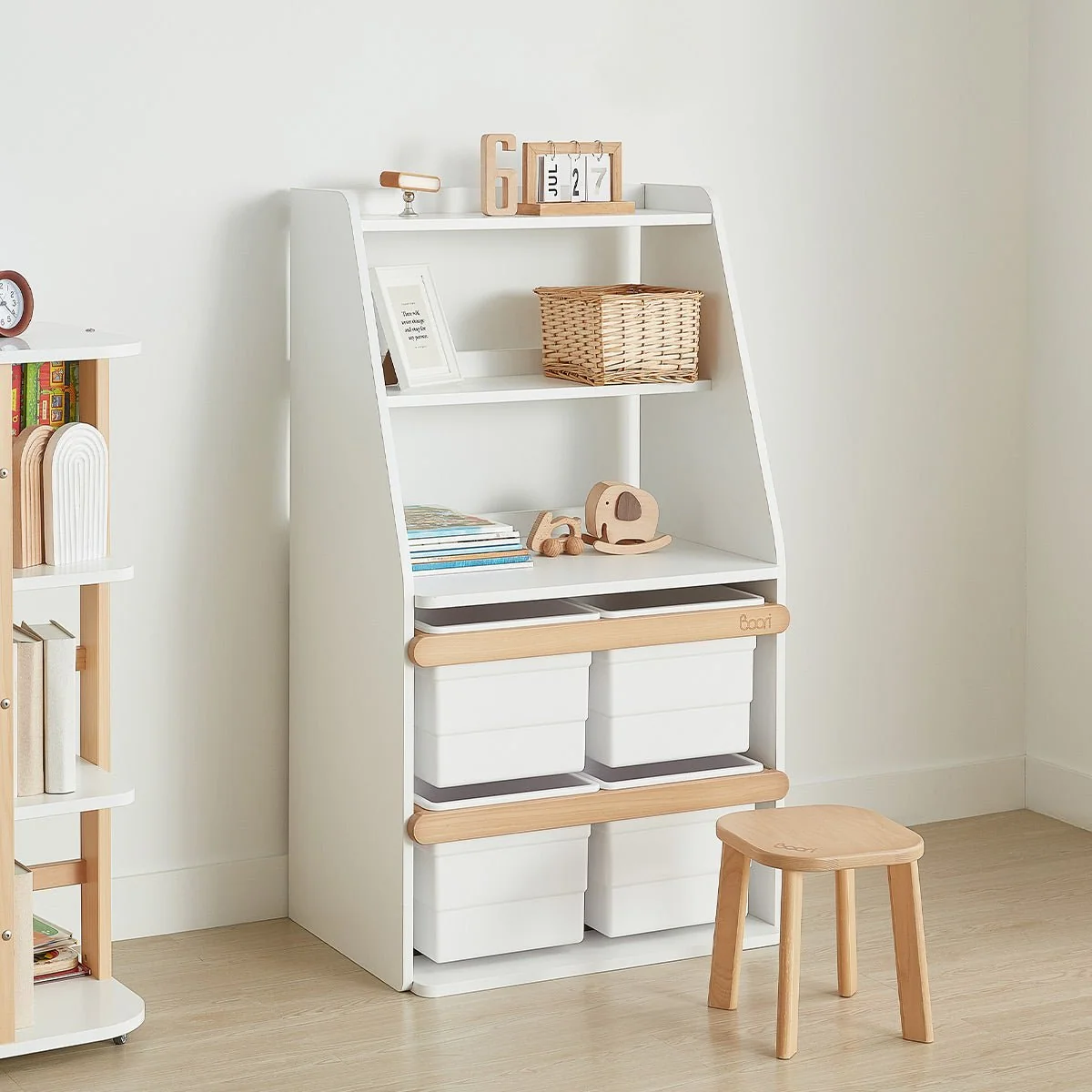
Keep the number of toys on display manageable. Rotating a small selection can make the room easier to reset and help each area keep its purpose. Check that containers remain accessible for the child using them, while small pieces and items needing supervision are stored appropriately. Storage is most useful when the routine is easy to maintain.
Compare the roles
Use the shortlist by function first, then compare dimensions, materials and the details on the relevant product page. The table is a starting point rather than a substitute for measuring your room.
| Piece | Best role | Detail to check |
|---|---|---|
| Tidy Climbing Gym | Active play | Footprint and use guidance |
| Euler Desk | Drawing or study | Three heights and room fit |
| Oslo Bookrack | Book access | Four pouches and capacity |
- Sketch the room and mark the clear route before browsing products.
- Pick one main activity need, then add a quieter option if space allows.
- Measure furniture against the site dimensions, including room needed for use.
- Check what is included, assembly details, materials and current availability on the product page.
Questions to settle
How do I plan a small playroom?
Protect the open floor area and choose fewer pieces with clearly defined roles. A book display or compact work surface may be easier to fit than several large activity stations. Measure routes and door swings as well as the furniture footprint.
Should I buy a bundle?
A bundle can gather compatible pieces, such as a table with chairs, but compare the included components with your needs. Confirm sizes, finishes, what’s included and whether separate pieces would suit the room better.
What should I check before ordering?
Read the current UK listing for dimensions, age or use guidance, material information, assembly requirements and availability. Product pages can change, so use the live store listing for final details.
Our take
Boori is a natural shortlist for a family planning distinct play and making zones because its UK range spans activity furniture, desks and accessible storage. Begin with the layout, then consider the Tidy Climbing Gym for movement, the Euler Desk for a defined work surface, or the Oslo Bookrack for reachable reading.
The limitation is that suitability depends on room dimensions, the child’s stage and current product details; the range cannot make a cramped layout work by itself. Check the measurements and guidance on the specific listings before choosing.