
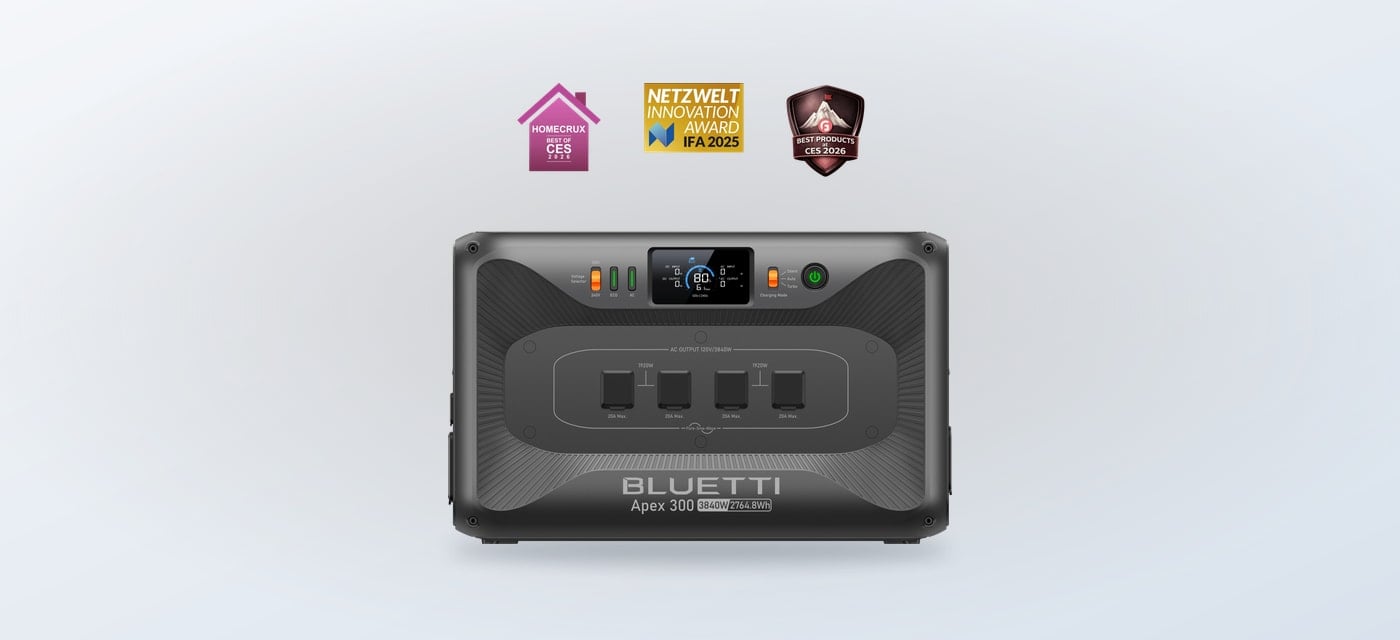
A clear guide to BLUETTI’s clean-energy story, its range of portable and home power products, and how to match the lineup to a real need.
Power stations have moved from niche camping gear into a broader conversation about household resilience, road travel and working away from outlets. BLUETTI is one of the brands building for that overlap, with products that range from compact battery boxes to expandable home backup systems.
For a first-time reader, the useful question is not simply which model has the biggest capacity. It is how the company organizes its range, what its products are designed to support, and where a buyer should look closely at the details.
Disclosure: this post includes affiliate links, and we may be paid a commission on purchases made through them.
→ View BLUETTI’s Canadian power range
The short version
- BLUETTI’s Canadian store covers portable power stations, solar generators, panels, expansion batteries and home backup.
- Elite 200 V2 is listed with 2,073.6Wh capacity and 2,600W output, a portable tier for broader device support.
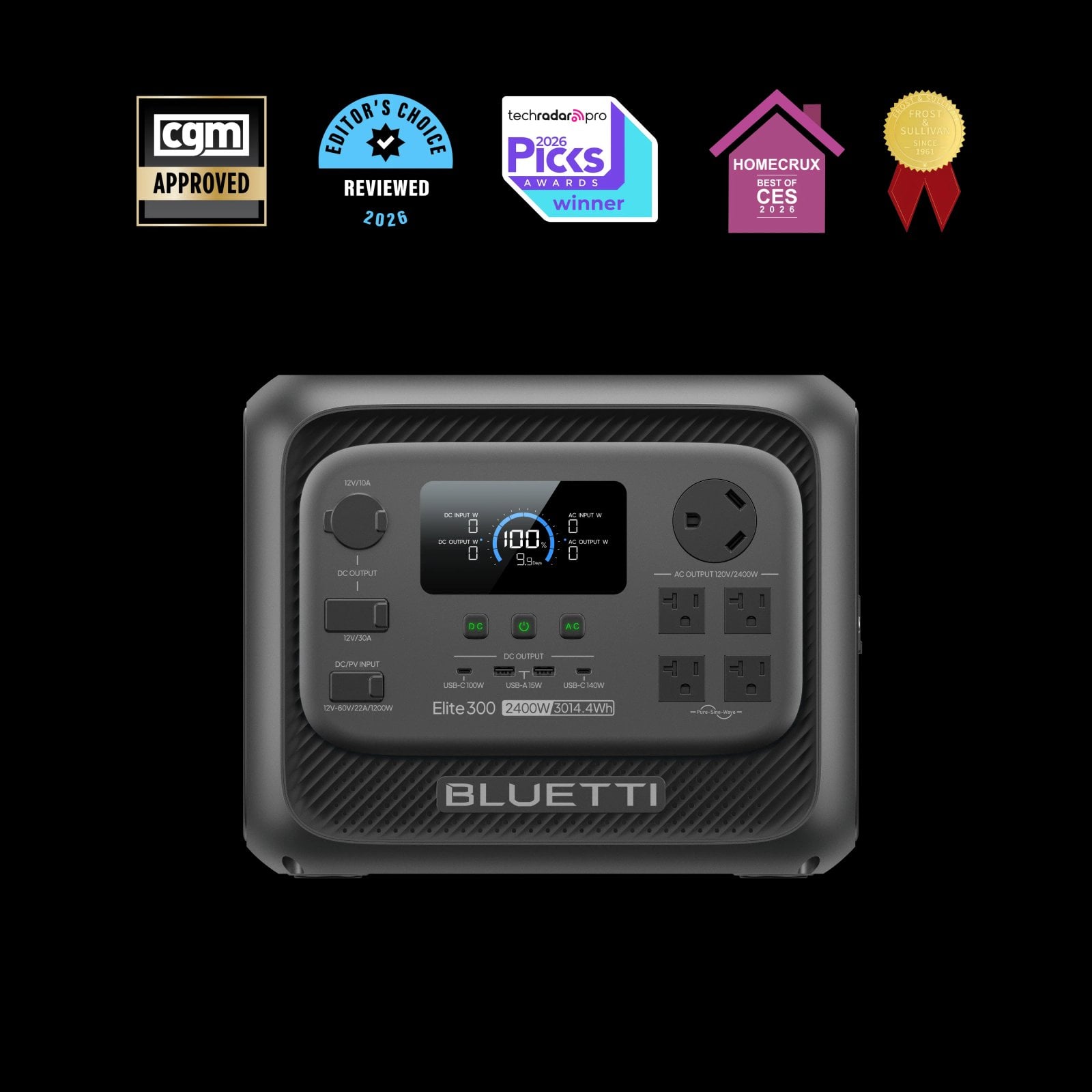
- Elite 300 raises capacity to 3,014Wh and is described for RV and home use.
- FridgePower takes a more focused route: refrigerator backup, fast UPS switching and smart alerts.
- Compare capacity, output, appliance requirements, recharge options and portability before choosing a system.
A clean-energy focus
On its Canadian storefront, BLUETTI describes itself through portable power stations and solar generator kits, with supporting panels, batteries and accessories. The pitch is practical: store electricity in a rechargeable battery, then use it where grid access is limited or a backup supply matters. That spans a campsite, a recreational vehicle, a remote work setup and selected household circuits.
The product structure shows the breadth more clearly than a single slogan. The Elite line is presented as portable power for a range of scales, while Apex models point toward higher output and expansion. Separate pages group systems around home backup, RV power and camping, giving shoppers a starting point based on the job rather than only the model number.
Three ideas recur across the lineup: portable battery storage, solar-compatible charging and expandability on selected systems. Those are useful distinctions, but they are not universal guarantees. Solar charging depends on compatible panels and conditions, and a battery’s runtime changes with the devices connected and their load.
→ Explore BLUETTI portable power stations
A range by scale
Capacity and output answer different questions. Watt-hours indicate how much energy a station stores; watts describe the power it can deliver at a moment. Both matter: capacity helps estimate runtime, while output determines whether the unit can run a particular appliance. BLUETTI’s Elite 200 V2 specifications list both figures, which helps with an initial screen, but shoppers should check the product details for outlet types, surge limits and charging details.
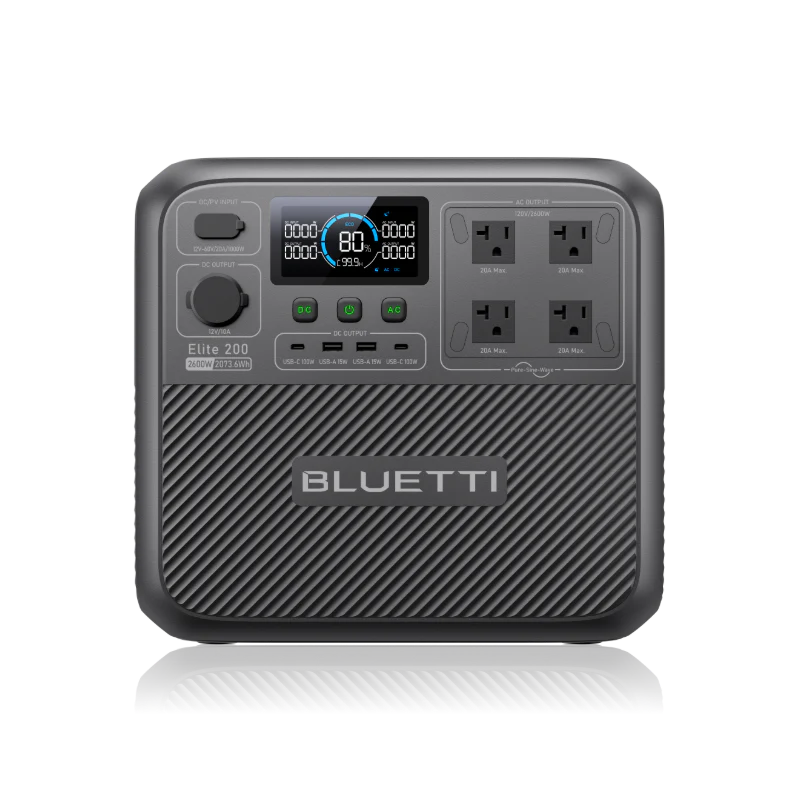
The Elite 200 V2 is listed at 2,073.6Wh and 2,600W. In broad terms, that capacity positions it above a small electronics-only battery and makes it worth considering for a mix of devices or shorter backup periods. The useful next step is to compare your actual loads: a laptop and lights have different demands from a kettle, heater or compressor appliance. The load list matters more than the headline capacity.
At a larger scale, the Elite 300 is listed with 3,014Wh capacity and 2,400W output. The Elite 300 listing positions it for RV and home use, suggesting a fit for people who value a higher stored-energy tier in a movable format. A bigger station such as the Elite 300 may offer more room for runtime, but it also brings more size and weight to account for when loading a vehicle or deciding where it will sit at home.
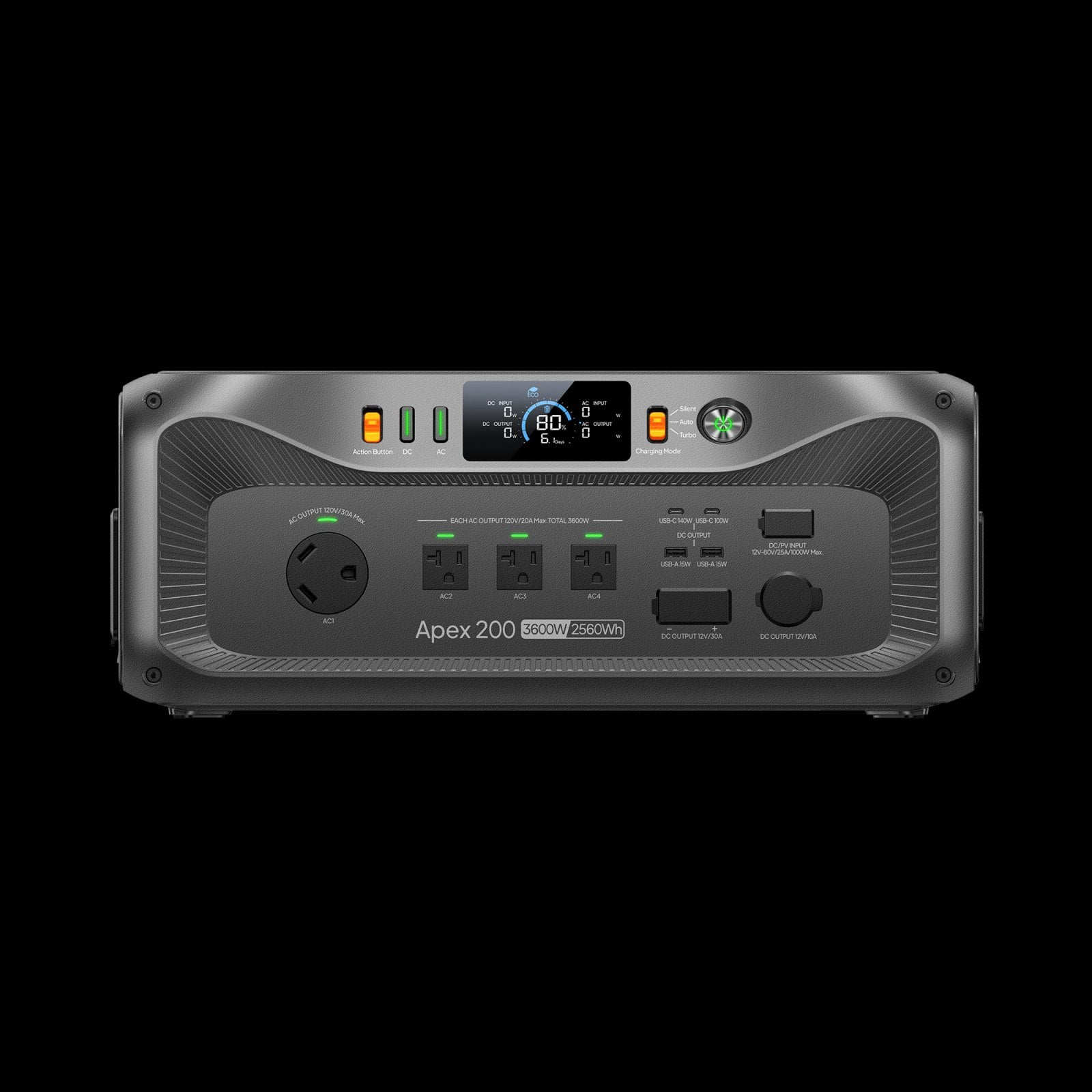
The Apex family represents another route, with select setups described as expandable. For a household planning around longer outages, it can be helpful to consider a core unit, compatible expansion batteries and the intended circuits as one system. That is a more involved decision than selecting a portable unit for occasional trips, and wiring, transfer arrangements and local installation requirements deserve careful attention.
→ See BLUETTI home backup options
Purpose-built backup
Not every buyer needs a general-purpose power station. BLUETTI’s FridgePower page focuses on keeping a refrigerator backed up. The FridgePower product page highlights a slim 75mm design, fast UPS switching and smart alerts. This is a more targeted approach: instead of building a larger portable kit around a critical appliance, the product is framed around that appliance’s continuity.
That focus also makes the buying questions specific. Confirm refrigerator compatibility and expected runtime from the official product details, and consider how alerts are delivered and how the system recharges after an outage. A dedicated product can simplify the decision, but it is not automatically a whole-home solution. Buyers who need to support more than the refrigerator should compare a broader backup system and its expansion options.
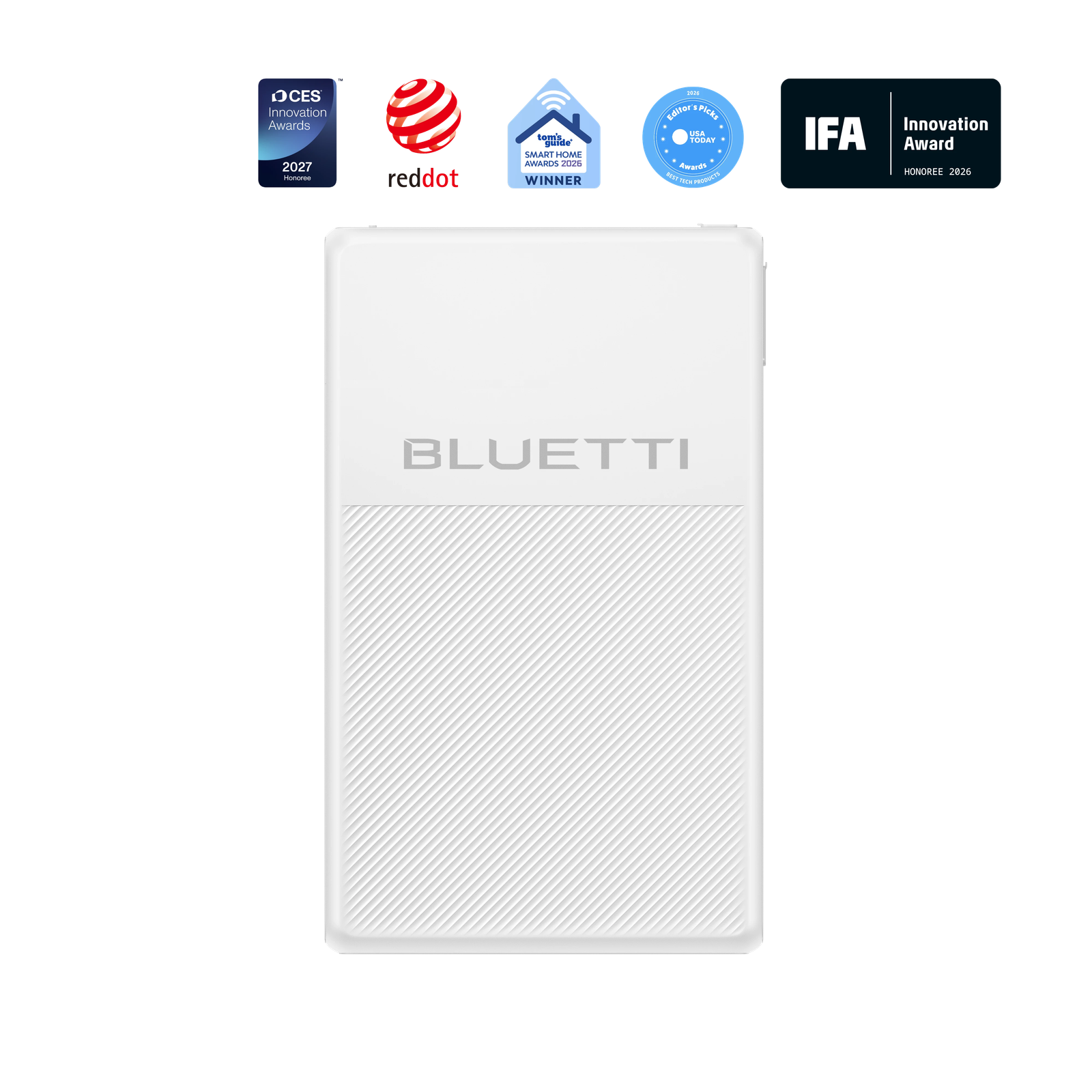
A compact unit such as the Elite 100 mini points in a different direction: lower footprint and easier transport for lighter-duty needs. On the other end, the Canadian range includes systems and accessories for RV solar setups and home backup. The range is therefore best understood as a set of use-case choices, not one ladder where the largest model is always the logical destination.
Choosing with context
Before comparing models, write down the equipment you intend to power and how long you need it to run. Then check power draw and startup requirements, especially for appliances with motors. This small bit of homework narrows the field more reliably than browsing by capacity alone.
- Start with the use: weekend camping, RV travel, refrigerator continuity or household backup call for different setups.
- Match output to devices: verify running and startup wattage, outlet types and any device-specific restrictions.
- Estimate runtime: account for the combined load and the fact that usable energy can vary by conditions.
- Plan recharging: compare wall, vehicle and solar options, plus the time and compatible accessories each requires.
- Account for handling: check dimensions and weight if the station will move between home, car and campsite.
Cost also follows those choices. Capacity, output, expansion batteries, panels and bundled accessories all affect the configuration, so comparing product pages at the same system scope is more useful than treating unlike bundles as equivalents. Check the Canadian store for current configuration and availability, since the lineup can change.
→ Compare BLUETTI product configurations
Is BLUETTI only for camping?
No. Camping and off-grid use are part of the range, but the Canadian store also presents home backup, RV systems, solar kits and a refrigerator-focused backup product. The right category depends on what needs power and whether the system must stay installed or travel.
What should a first-time buyer compare?
Compare capacity, continuous and surge output, device compatibility, charging methods, dimensions and expansion support. Use the actual appliance labels or manuals to confirm loads, then check the product page for the system’s limits.
Are solar panels included?
Some storefront listings are bundled kits and others are standalone stations. Check the exact Canadian product configuration and included-items section before assuming a panel, cable or expansion battery comes in the box.
Our take
BLUETTI is worth a look for readers who want one brand spanning portable battery power, solar-compatible setups and more focused backup products. Its range makes the most sense when chosen around a clear job: the Elite 200 V2 for a capable portable tier, the Elite 300 when greater stored energy matters, or FridgePower when refrigerator backup is the priority.
The main limitation is that the range’s breadth can make model names and bundles difficult to compare at first. Specs are a starting filter, not a promise of runtime; buyers still need to check loads, charging conditions, included accessories and installation needs. Begin with the products that match your scenario, then confirm those details on the Canadian store before choosing.