
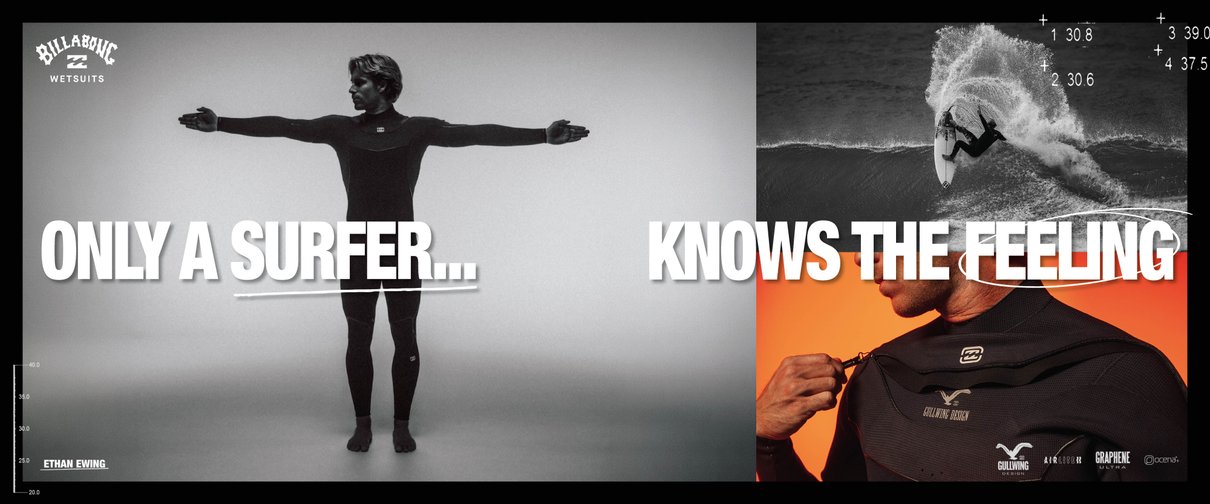
A practical guide to choosing wetsuit thickness, entry style and supporting gear for colder UK surf sessions, using Billabong’s current UK range.
As autumn gives way to winter, a quick surf can become a question of how long you can stay warm before it becomes a question of whether the waves are worth it. A wetsuit choice depends on water temperature, how readily you feel the cold and the length of the session, so a model name alone will not settle it.
We reviewed the product information on Billabong’s UK store. Its men’s full-suit range currently shows 3/2 mm, 4/3 mm and 5/4 mm options, as well as chest-zip and back-zip designs. Here is how to narrow those choices for colder UK surf, and where the listed models differ.
Disclosure: this post includes affiliate links, and we may be paid a commission on purchases made through them.
The short version
- The UK range lists 3/2 mm, 4/3 mm and 5/4 mm suits; choose according to water conditions and the time you expect to be in.
- The 5/4mm Absolute Ultra is a hooded chest-zip option for colder sessions.
- The 4/3mm Furnace Pro Series is positioned around flexibility, while the 4/3mm Absolute Core uses a back zip.
- Plan for hands, feet and the change after surfing too; Billabong’s UK surf range includes boots, gloves and changing ponchos.
Read the water
Thickness is the first useful filter, but it is not a universal temperature chart. The UK category on Billabong’s site presents thickness choices rather than a local water-temperature recommendation. A 3/2 mm suit is the lighter option in this selection; a 4/3 mm suit adds material, and the 5/4 mm group is the thickest listed here. The right choice also depends on wind, how long you are out and how quickly you cool down between sets.
For regular late-autumn and winter sessions, compare the warmer 5/4 mm suits first, then consider whether you need the extra coverage of a hood. The 5/4mm Absolute Ultra is explicitly listed as hooded and chest zip, while the 5/4mm Furnace Ultra Gullwing is a chest-zip design without “hooded” in its product name. Read the current product details carefully rather than assuming two suits with the same thickness share the same coverage.
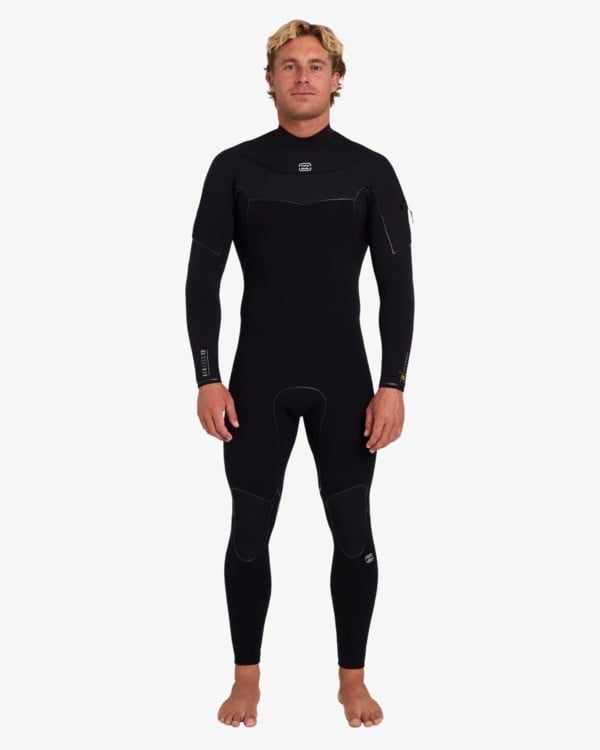
A sensible short list starts with your usual conditions, not the coldest day you can imagine. If sessions are brief or you surf in milder conditions, a lighter suit may feel more suitable. If you stay out for longer in cold water, look closely at the thicker models and accessories. The store’s wetsuit guide gives further context on its series, while the 5/4mm Absolute Ultra page and 5/4mm Furnace Ultra listing show how the thicker models differ.
- Start with the conditions you surf most often.
- Compare thickness before focusing on a range name.
- Check the fit and construction details on the individual UK product page.
→ Compare Billabong wetsuit options
Choose the entry
Entry style affects how the suit opens and closes, and it is one of the details that can matter in daily use. Billabong’s UK listings include chest zip, back zip and zipperless options across the wetsuit category. The featured models here are chest zip or back zip, so shoppers who specifically want zipperless should use the store filters and inspect that product’s own description.
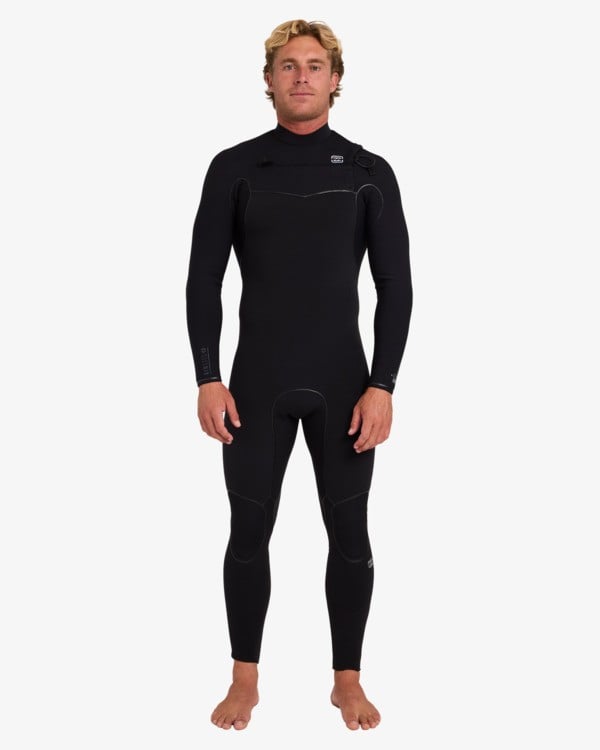
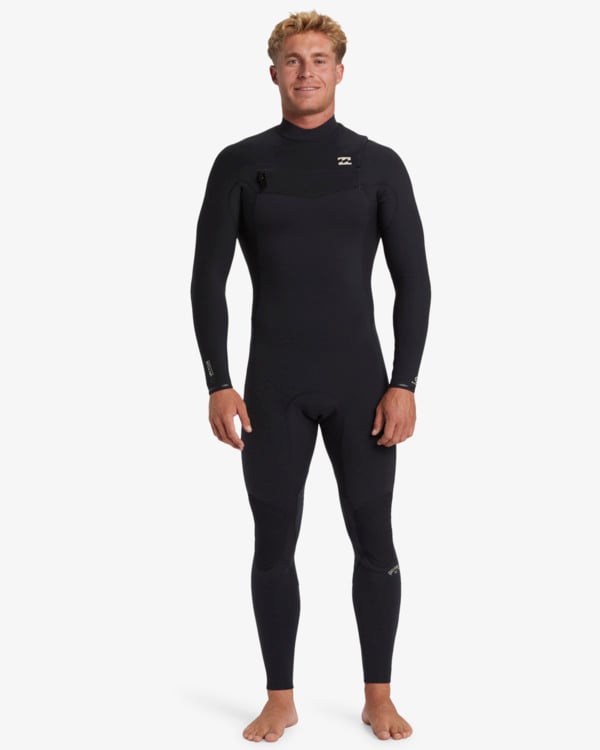
- Chest zip: featured on the 5/4mm Absolute Ultra, Furnace Ultra Gullwing and 4/3mm Furnace Pro Series.
- Back zip: the 4/3mm Absolute Core listing uses this entry style.
- Hood: the Absolute Ultra model name specifies a hood; check whether the extra coverage matches your needs.
The 5/4mm Absolute Ultra is the clearest pick here for someone seeking a thicker, hooded suit. The limitation is equally clear: if you do not want an attached hood or prefer a different entry, its headline specification may not suit you. Compare the complete fit notes and current size availability before deciding. It is also useful to compare the Furnace Ultra Gullwing if you want a 5/4 mm chest-zip alternative.
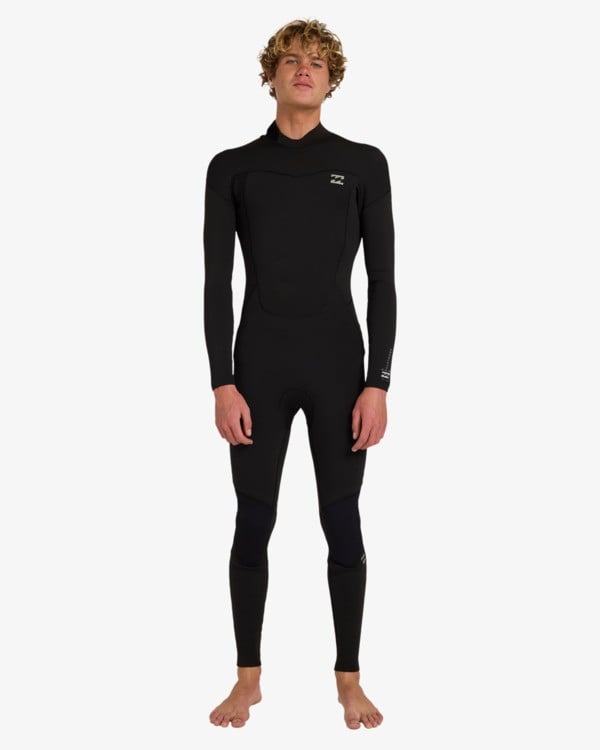
The 4/3mm Absolute Core gives a useful contrast: a midweight thickness and back zip, without a hood called out in its name. That may make it worth considering for surfers who want a simpler specification or who find the thicker models excessive for their usual conditions. The 4/3mm Furnace Pro Series offers the same listed thickness with a chest zip and flexibility positioning. The product listing does not replace trying the right size; close fit matters, and a suit that restricts movement is a poor match whatever the series name promises.
Compare suit lines
Billabong’s series labels help frame a comparison, but shoppers should treat them as signposts and verify the detailed construction on each page. The store describes Furnace Pro Series around flexibility and Furnace REVO around stretch and lightness. Its broader wetsuit guide also places Absolute Core among its essentials and Furnace Ultra among its warmth-focused lines. Those are the brand’s own positioning statements, not independent performance ratings.
The 4/3mm Furnace Pro Series is a reasonable comparison point if freedom of movement is high on your list: Billabong describes the line as focused on flexibility. A 5/4mm Furnace Ultra Gullwing steps up in thickness and sits in a different Furnace family. Compare the listed Absolute Ultra hooded suit as another thicker model, and the Absolute Core back-zip option if you are weighing entry styles. For someone choosing between them, the decision is not simply “which line is best”; it is whether a thicker suit better fits the conditions, and whether the fit and construction details suit the surfer.
Here is a compact read of the four listings, using only the features stated on the UK store:
| Model | Listed details | Best suited to |
|---|---|---|
| 5/4mm Absolute Ultra | 5/4 mm, hooded, chest zip | Colder sessions where hood coverage is wanted |
| 5/4mm Furnace Ultra Gullwing | 5/4 mm, chest zip | Colder sessions without a hood specified in the name |
| 4/3mm Furnace Pro Series | 4/3 mm, chest zip; line positioned around flexibility | Surfers prioritising the brand’s flexibility cue |
| 4/3mm Absolute Core | 4/3 mm, back zip | Those preferring a back-zip option or a midweight listing |
These are starting points, not guarantees of warmth or fit. For milder conditions, compare the store’s lighter 3/2 mm options; for colder days, begin with the two 5/4 mm models and confirm the details that matter to you.
Before settling on a model, compare these details side by side:
- Thickness: match the listed millimetres to your conditions and session duration.
- Coverage: check whether a hood is included or separately needed.
- Entry: choose chest or back zip based on preference, then inspect the product page for its exact closure.
- Fit notes: use the brand’s sizing information and check current size availability.
Seal the gaps
A warm core does not guarantee comfortable extremities. Billabong’s UK surf section lists wetsuit boots, gloves and mittens, with options in different thicknesses. These are worth considering when cold hands or feet shorten a session, but fit and the local conditions still matter. We would prioritise the suit first, then add the pieces that solve a real discomfort rather than assembling a full set by default.
There is also the practical stretch between car park and water. The UK surf collection lists a hooded changing poncho, an easy layer for changing with more coverage. It is not a substitute for thermal surfwear, and it adds something to carry, but it can make the pre- and post-session routine less exposed. Check the Billabong surf collection for the poncho, thicker suit options and current availability.
- Choose boots or gloves only if your hands or feet need extra coverage.
- Use the poncho as a changing layer, not a replacement for a wetsuit.
- Recheck sizing and availability on the UK product listing.
→ Check Billabong wetsuit availability
- Compare the size chart with your measurements.
- Check the listed fit and construction details for the exact model.
- Consider your usual water conditions before choosing thickness.
Fit before warmth
When comparing suits online, do not let a warm-sounding name outrank basic fit. Check the product page’s size chart, body measurements and fit guidance, and allow time to compare your measurements rather than guessing from a casual clothing size. Look for clear information on seams, lining and recommended use where it is provided. If a detail is not stated on the page, do not infer it from another model in the same family.
The practical trade-off is that a thicker suit can be more appropriate in colder conditions but may feel like more suit than needed elsewhere. A thinner option can be easier to wear in milder water, but may not support a long cold session. Billabong’s listings do not make this choice for every beach or surfer; use the range as a starting point, then account for local water and your own tolerance.
- Check the size chart against your measurements.
- Review the selected model’s own fit and construction notes.
- Match thickness to your usual sessions rather than a single extreme day.
Which thickness is best for a UK winter?
There is no single answer for every UK coastline or session. Billabong lists 3/2 mm, 4/3 mm and 5/4 mm options. Compare local water conditions, session length and your cold tolerance, then confirm the product details on the UK store.
Is a hooded wetsuit necessary?
It depends on how cold the conditions feel and how much coverage you want. The 5/4mm Absolute Ultra is listed as hooded; compare its product details with non-hooded suits before choosing.
What else should I check?
Check size availability, the size chart, entry style and the product’s construction notes. If your hands and feet get cold first, compare boots and gloves in the UK surf accessories range.
Our take
For colder sessions, we would begin by comparing the 5/4 mm suits, especially the hooded Absolute Ultra against the Furnace Ultra Gullwing. If that thickness seems excessive for your regular surf, the 4/3 mm options offer a more moderate starting point: the flexibility-positioned Furnace Pro Series and back-zip Absolute Core have distinct stated features to compare.
The limitation is that online descriptions cannot tell you which thickness will feel right at your break, nor guarantee a good fit. Use the product pages for exact specifications and availability, and make the final call around your local water and measurements.